The Impact of Spoke Lacing Patterns on Wheel Power Transfer
-
Let’s start with the conclusion: The lacing pattern of bicycle spokes significantly impacts a wheel’s power transfer responsiveness, stiffness, durability, weight, and aerodynamics. Common patterns include radial lacing, cross lacing, and mixed lacing (using different patterns on different parts of the same wheel, most common on the rear wheel). The spoke pattern determines how the wheel resists the various forces generated during pedaling, especially torque.
When pedaling, chain tension creates torque, attempting to rotate the hub relative to the rim. Here, a larger angle of the drive-side spokes relative to the tangential direction of the rim allows for more effective resistance against this torque. This results in more direct, rapid, and efficient power transfer, yielding a sharper pedaling response. Consequently, cross lacing, which provides larger spoke angles, has become the most common spoking method. Based on the number of hub flange holes a spoke crosses (or the number of intersections with other spokes), cross lacing is categorized as 1-cross (1X), 2-cross (2X), 3-cross (3X), etc. Its characteristic is that spokes leave the hub flange, cross diagonally over a certain distance before connecting to the rim, intersecting with spokes on both the same and opposite sides. Generally, the higher the number of crosses (larger X number), the larger the spoke angle.
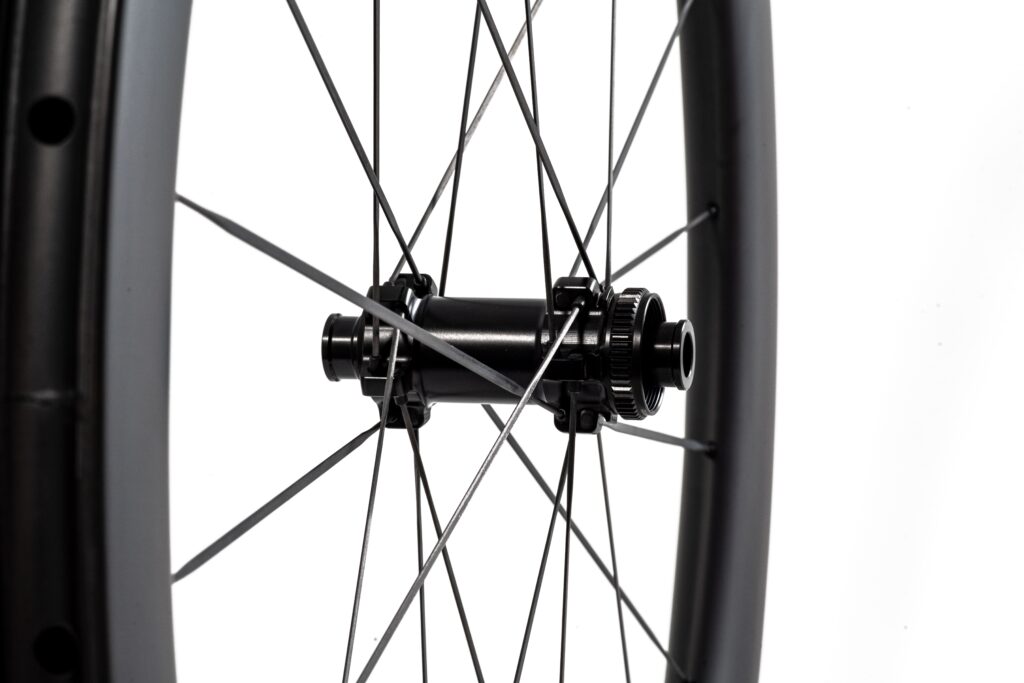
The front wheel of the RW PRO-50 adopts a 1:1 cross lacing pattern. Among the various cross patterns, 2X is the most mainstream and balanced choice. Wheel design must consider not only resistance to torque (torsional stiffness) but also longitudinal stiffness (impact resistance), lateral stiffness (cornering stability), durability, aerodynamics, spoke tension management, and weight. The 2X pattern offers excellent torsional and lateral stiffness, making it the most efficient and reliable choice for power transfer, with its weight and aerodynamic properties falling within an acceptable range. Therefore, the vast majority of road, mountain, and gravel bike rear wheels use 2X or 3X lacing on the drive side.
However, traditional rear wheel lacing with equal spoke counts (e.g., 12 spokes on each side of a 24-hole wheel) has a critical issue: spoke tension imbalance. During pedaling, the driving force from the chain tightens the drive-side spokes while simultaneously loosening the non-drive-side spokes. The weight of the cassette and disc brake system (especially disc brakes) further exacerbates the tendency for non-drive-side spokes to go slack, leading to a significant tension disparity between the two sides. Excessively low tension on the non-drive side weakens the wheel’s lateral stiffness, affects handling, and reduces durability.
Adopting a 2:1 mixed lacing pattern effectively solves this problem. This method requires specially designed hubs where the ratio of drive-side to non-drive-side spokes is 2:1 (e.g., a 24-hole hub: 16 drive-side, 8 non-drive-side). The key points are:
-
Doubled Drive-Side Spokes: Combined with cross lacing (typically 2X), this means the driving force is shared among more spokes. For the same driving force, the tension increase per individual spoke is smaller.
-
Halved Non-Drive-Side Spokes: These are typically laced radially or in a 1X pattern.
The advantages are significant:
-
Greatly Improved Tension Balance: Allows for an overall higher and more balanced spoke tension setup, directly addressing the core issue of low non-drive-side tension.
-
Enhanced Drive Stiffness & Response: More drive-side spokes combined with the cross angle provide extremely strong torsional resistance. Power transfer becomes more direct and efficient, with exceptionally sharp acceleration and climbing response.
-
Increased Lateral Stiffness & Durability: Higher non-drive-side tension significantly improves lateral support. Balanced high tension also reduces the risk of spoke fatigue, making the overall structure more stable and reliable.
There are also certain limitations: It requires dedicated 2:1 hubs; drive-side and non-drive-side spokes are different lengths, requiring two specifications; lacing and truing require higher technical skill; cost is relatively higher compared to traditional lacing.
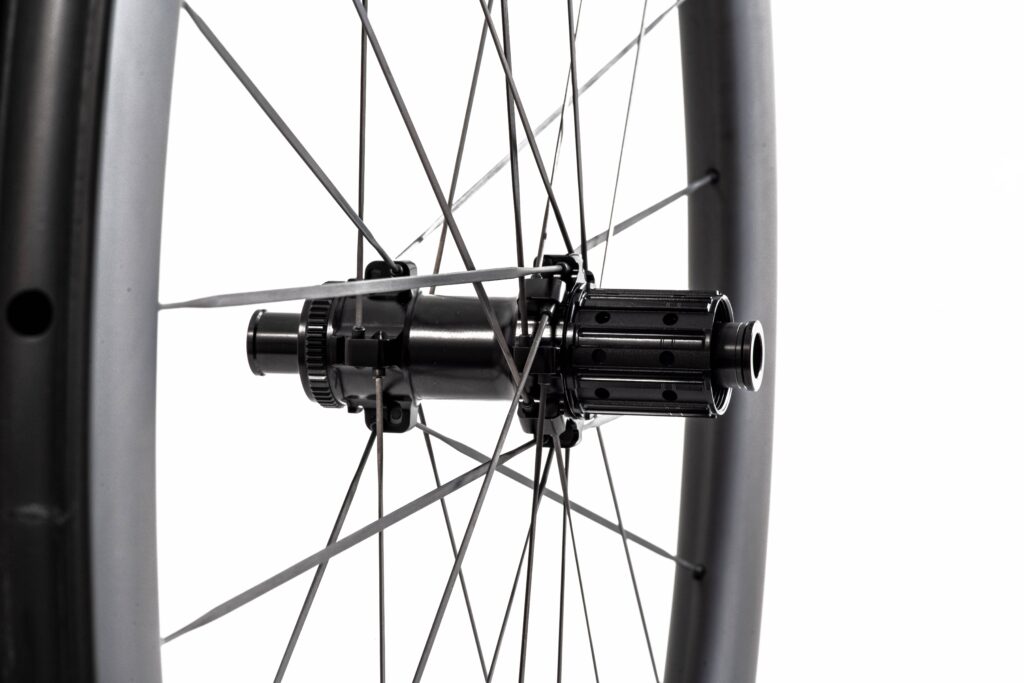
The RW PRO-50 rear wheel features a 2:1 lacing pattern with 2-cross (2X) lacing on the drive side. The Crossrim Solution: Leveraging over a decade of wheel R&D and manufacturing experience, Crossrim has specifically optimized the application challenges of the 2:1 pattern. Their performance-oriented, balanced wheel series utilizes the advanced 2:1 lacing technology mentioned above, offered at a highly competitive price, providing cyclists with high-value, high-performance options. Visit the crossrim.com shop to learn more or make a purchase.
In summary, for riders pursuing ultimate performance and requiring the strongest pedaling stiffness and reliability, the 2:1 lacing pattern is one of the most advanced and effective solutions available today. Through innovative spoke count distribution and lacing combinations, it solves the inherent tension problems of traditional rear wheels, significantly enhancing drive efficiency, responsiveness, and overall durability, representing an important development direction in modern high-performance wheel design.
-